Nuria Matesanz, Ivana Nikoli?, Magdalena Leiva, Marta Pulgarín-Alfaro, Ayelén M. Santamans, Edgar Bernardo, Alfonso Mora, Leticia Herrera-Melle, Elena Rodríguez, Daniel Beiroa, Ainoa Caballero, Elena Martín-García, Rebeca Acín-Pérez, Lourdes Hernández-Cosido, Luis Leiva-Vega, Jorge L. Torres, Francisco Centeno, Angel R. Nebreda, José Antonio Enríquez, Rubén Nogueiras, Miguel Marcos & Guadalupe Sabio.
Adipose tissue has emerged as an important regulator of whole-body metabolism, and its capacity to dissipate energy in the form of heat has acquired a special relevance in recent years as potential treatment for obesity. In this context, the p38MAPK pathway has arisen as a key player in the thermogenic program because it is required for the activation of brown adipose tissue (BAT) thermogenesis and participates also in the transformation of white adipose tissue (WAT) into BAT-like depot called beige/brite tissue.

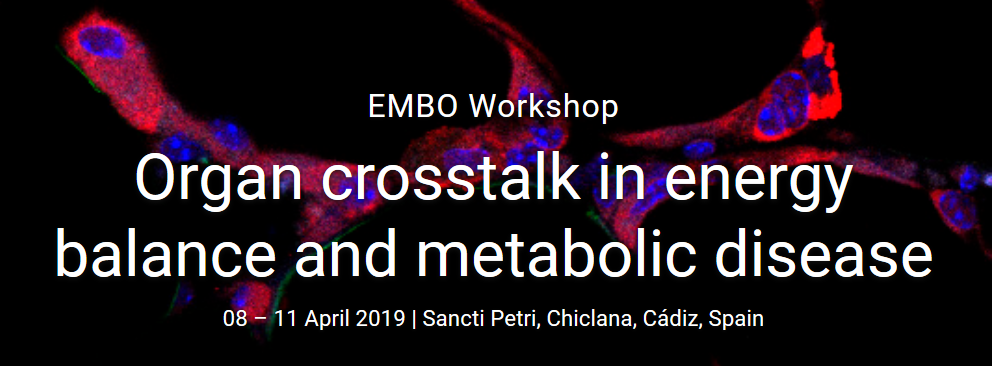
Regulation of browning and BAT activation by p38 pathway (Image: Ivana Nikoli?).
Here, using mice that are deficient in p38? specifically in adipose tissue (p38?Fab-KO), we unexpectedly found that lack of p38? protected against high-fat diet (HFD)-induced obesity. We also showed that p38?Fab-KO mice presented higher energy expenditure due to increased BAT thermogenesis. Mechanistically, we found that lack of p38? resulted in the activation of the related protein kinase family member p38?.
Our results showed that p38? is activated in BAT by cold exposure, and lack of this kinase specifically in adipose tissue (p38?Fab-KO) resulted in overweight together with reduced energy expenditure and lower body and skin surface temperature in the BAT region. These observations indicate that p38? probably blocks BAT thermogenesis through p38? inhibition. Consistent with the results obtained in animals, p38? was reduced in visceral and subcutaneous adipose tissue of subjects with obesity and was inversely correlated with body mass index (BMI).
Altogether, we have elucidated a mechanism implicated in physiological BAT activation that has potential clinical implications for the treatment of obesity and related diseases such as diabetes.