at the CNIO

Category: Publications (Page 5 of 19)

Hepatic nutrient and hormone signaling to mTORC1 instructs the postnatal metabolic zonation of the liver

Ana Belén Plata-Gómez, Lucía de Prado-Rivas, Alba Sanz, Nerea Deleyto-Seldas, Fernando García, Celia de la Calle Arregui, Camila Silva, Eduardo Caleiras, Osvaldo Graña-Castro, Elena Piñeiro-Yáñez, Joseph Krebs, Luis Leiva-Vega, Javier Muñoz, Ajay Jain, Guadalupe Sabio & Alejo Efeyan

The metabolic functions of the liver are spatially organized in a phenomenon called zonation, linked to the differential exposure of portal and central hepatocytes to nutrient-rich blood. The mTORC1 signaling pathway controls cellular metabolism in response to nutrients and insulin fluctuations.
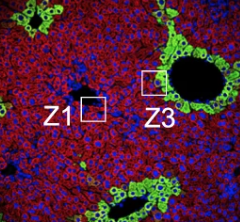
Liver zonation (Image: Ana Belén Plata Gómez).

Here we show that simultaneous genetic activation of nutrient and hormone signaling to mTORC1 in hepatocytes results in impaired establishment of postnatal metabolic and zonal identity of hepatocytes. Mutant hepatocytes fail to upregulate postnatally the expression of Frizzled receptors 1 and 8, and show reduced Wnt/?-catenin activation. This defect, alongside diminished paracrine Wnt2 ligand expression by endothelial cells, underlies impaired postnatal maturation. Impaired zonation is recapitulated in a model of constant supply of nutrients by parenteral nutrition to piglets.

Our work shows the role of hepatocyte sensing of fluctuations in nutrients and hormones for triggering a latent metabolic zonation program.
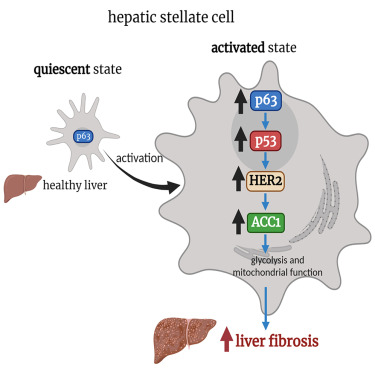
p63 controls metabolic activation of hepatic stellate cells and fibrosis via an HER2-ACC1 pathway

Marcos F. Fondevila, Eva Novoa, Maria J. Gonzalez-Rellan, Uxia Fernandez, Violeta Heras, Begoña Porteiro, Tamara Parracho, Valentina Dorta, Cristina Riobello, Natalia da Silva Lima, Samuel Seoane, Maria Garcia-Vence, Maria P. Chantada-Vazquez, Susana B. Bravo, Ana Senra, Magdalena Leiva, Miguel Marcos, Guadalupe Sabio, Roman Perez-Fernandez, Carlos Dieguez, Vincent Prevot, Markus Schwaninger, Ashwin Woodhoo, Maria L. Martinez-Chantar, Robert Schwabe, Francisco J. Cubero, Marta Varela-Rey, Javier Crespo, Paula Iruzubieta, Ruben Nogueiras.

The p63 protein has pleiotropic functions and, in the liver, participates in the progression of nonalcoholic fatty liver disease (NAFLD). However, its functions in hepatic stellate cells (HSCs) have not yet been explored.

TAp63 is induced in HSCs from animal models and patients with liver fibrosis and its levels positively correlate with NAFLD activity score and fibrosis stage. In mice, genetic depletion of TAp63 in HSCs reduces the diet-induced liver fibrosis. In vitro silencing of p63 blunts TGF-?1-induced HSCs activation by reducing mitochondrial respiration and glycolysis, as well as decreasing acetyl CoA carboxylase 1 (ACC1).

Ectopic expression of TAp63 induces the activation of HSCs and increases the expression and activity of ACC1 by promoting the transcriptional activity of HER2. Genetic inhibition of both HER2 and ACC1 blunt TAp63-induced activation of HSCs. Thus, TAp63 induces HSC activation by stimulating the HER2-ACC1 axis and participates in the development of liver fibrosis.

A combination of a dopamine receptor 2 agonist and a kappa opioid receptor antagonist synergistically reduces weight in diet-induced obese rodents

Beatriz Cicuéndez, Javier Pérez-García & Cintia Folgueira.

As the global obesity rate increases, so does the urgency to find effective anti-obesity drugs. In the search for therapeutic targets, central nervous system (CNS) mechanisms engaged in the regulation of energy expenditure and food intake, such as the opioid and dopamine systems, are crucial.

Increased temperature in a mouse treated with BC and PF-04455242 (Image: Cintia Folgueira).

In this study, we examined the effect on body weight of two drugs: bromocriptine (BC), a D2R receptor agonist, and PF-04455242, a selective ? opioid receptor (KOR) antagonist. Using diet-induced obese (DIO) rats, we aimed to ascertain whether the administration of BC and PF-04455242, independently or in combination, could enhance body weight loss. Furthermore, the present work demonstrates that the peripheral coadministration of BC and PF-04455242 enhances the reduction of weight in DIO rats and leads to a decrease in adiposity in a food-intake-independent manner. These effects were based on heightened energy expenditure, particularly through the activation of brown adipose tissue (BAT) thermogenesis.

Overall, our findings indicate that the combination of BC and PF-04455242 effectively induces body weight loss through increased energy expenditure by increasing thermogenic activity and highlight the importance of the combined use of drugs to combat obesity.

« Older posts Newer posts »

© 2026 Sabio lab

Theme by Anders Norén — Up ↑