at the CNIO

Tag: p38γ (Page 5 of 7)

Uncovering the role of p38 family members in adipose tissue physiology

Magdalena Leiva, Nuria Matesanz, Marta Pulgarín-Alfaro, Ivana Nikolić & Guadalupe Sabio.

The complex functions of adipose tissue have been a focus of research interest over the past twenty years. Adipose tissue is not only the main energy storage depot, but also one of the largest endocrine organs in the body and carries out crucial metabolic functions. Moreover, brown and beige adipose depots are major sites of energy expenditure through the activation of adaptive, non-shivering thermogenesis.
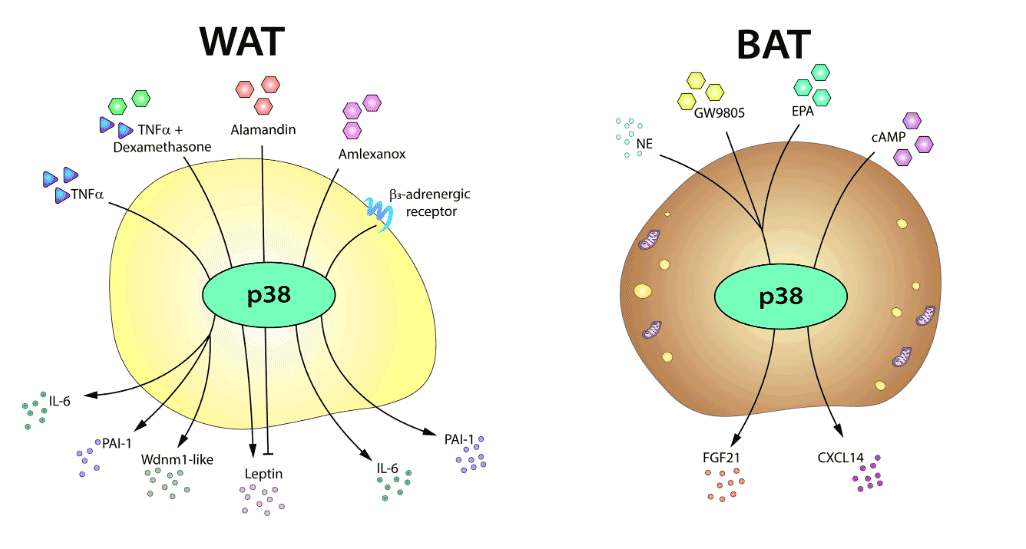
p38-mediated adipose tissue secretome
The p38-mediated adipose tissue secretome.

In recent years, numerous signaling molecules and pathways have emerged as critical regulators of adipose tissue, in both homeostasis and obesity-related disease. Among the best characterized are members of the p38 kinase family. The activity of these kinases has emerged as a key contributor to the biology of the white and brown adipose tissues, and their modulation could provide new therapeutic approaches against obesity.

Here, we give an overview of the roles of the distinct p38 family members in adipose tissue, focusing on their actions in adipogenesis, thermogenic activity, and secretory function.

Stress-activated kinases signaling pathways in cancer development

Leticia Herrera-Melle, María Crespo, Magdalena Leiva & Guadalupe Sabio.

Cancer is a large group of diseases characterized by abnormal cell growth that can lead to metastasis. It is the second leading cause of death worldwide, and its incidence is expected to rise over the next decades. Stress-activated protein kinases (SAPK) are important players in its regulation. Several studies have tried to unravel their role; however, their pro-tumorigenic or anti-tumorigenic properties are sometimes controversial.

JNK control of tumor microenvironment
JNK control of tumor microenvironment.

In this review, we will discuss the main roles of the different SAPK in the control of tumor development through essential processes such as cell proliferation, apoptosis or invasiveness. We will also show the latest discoveries regarding the contribution of SAPK in shaping tumor microenvironment through the regulation of organ crosstalk and immune cell response during cancer progression.

All these studies are relevant examples of how SAPK offer new therapeutic avenues for cancer patients that may help increase their survival.

p38γ is essential for cell cycle progression and liver tumorigenesis

Antonia Tomás-Loba, Elisa Manieri, Bárbara González-Terán, Alfonso Mora, Luis Leiva-Vega, Ayelén M. Santamans, Rafael Romero-Becerra, Elena Rodríguez, Aránzazu Pintor-Chocano, Ferran Feixas, Juan Antonio López, Beatriz Caballero, Marianna Trakala, Óscar Blanco, Jorge L. Torres, Lourdes Hernández-Cosido, Valle Montalvo-Romeral, Nuria Matesanz, Marta Roche-Molina, Juan Antonio Bernal, Hannah Mischo, Marta León, Ainoa Caballero, Diego Miranda-Saavedra, Jesús Ruiz-Cabello, Yulia A. Nevzorova, Francisco Javier Cubero, Jerónimo Bravo, Jesús Vázquez, Marcos Malumbres, Miguel Marcos, Sílvia Osuna & Guadalupe Sabio.

The cell cycle is a tightly regulated process that is controlled by the conserved cyclin-dependent kinase (CDK)–cyclin protein complex. However, control of the G0-to-G1 transition is not completely understood.

Mitosis in liver
Mitosis in hepatocytes (Photo: Alfonso Mora/CNIC).

Here we demonstrate that p38 MAPK gamma (p38γ) acts as a CDK-like kinase and thus cooperates with CDKs, regulating entry into the cell cycle. p38γ shares high sequence homology, inhibition sensitivity and substrate specificity with CDK family members. In mouse hepatocytes, p38γ induces proliferation after partial hepatectomy by promoting the phosphorylation of retinoblastoma tumour suppressor protein at known CDK target residues.

Lack of p38γ or treatment with the p38γ inhibitor pirfenidone protects against the chemically induced formation of liver tumours. Furthermore, biopsies of human hepatocellular carcinoma show high expression of p38γ, suggesting that p38γ could be a therapeutic target in the treatment of this disease.

« Older posts Newer posts »

© 2026 Sabio lab

Theme by Anders Norén — Up ↑