Guadalupe sabio explica que “cuando estamos en ayunas, la disminución de los niveles de glucosa en sangre contribuye a desencadenar el hambre. Cuando esto sucede se activa el sistema nervioso simpático, lo que puede aumentar la liberación de glucagón y cortisol, hormonas que promueven la liberación de glucosa almacenada en el hígado para mantener los niveles de azúcar en sangre. Además, el sistema digestivo secreta diversas hormonas que estimulan el apetito, como la grelina, que se libera cuando el estómago está vacío”.
Tag: liver (Page 7 of 19)
Osman Ahmed, April S. Caravaca, María Crespo, Wanmin Dai, Ting Liu, Qi Guo , Magdalena Leiva, Guadalupe Sabio, Vladimir S. Shavva, Stephen G. Malin & Peder S. Olofsson.
The liver is an important immunological organ and liver inflammation is part of the pathophysiology of non-alcoholic steatohepatitis, a condition that may promote cirrhosis, liver cancer, liver failure, and cardiovascular disease. Despite dense innervation of the liver parenchyma, little is known about neural regulation of liver function in inflammation. Here, we study vagus nerve control of the liver response to acute inflammation.
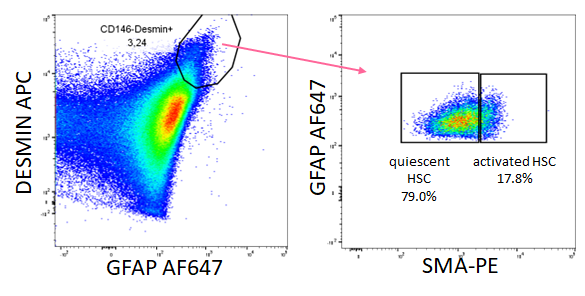
Methods: Male C57BL/6 J mice were subjected to either sham surgery, surgical vagotomy, or electrical vagus nerve stimulation followed by intraperitoneal injection of the TLR2 agonist zymosan. Animals were euthanized and tissues collected 12 h after injection. Samples were analyzed by qPCR, RNAseq, flow cytometry, or ELISA.
Results: Hepatic mRNA levels of pro-inflammatory mediators Ccl2, Il-1?, and Tnf-? were significantly higher in vagotomized mice compared with mice subjected to sham surgery. Differences in liver Ccl2 levels between treatment groups were largely reflected in the plasma chemokine (C-C motif) ligand 2 (CCL2) concentration. In line with this, we observed a higher number of macrophages in the livers of vagotomized mice compared with sham as measured by flow cytometry. In mice subjected to electrical vagus nerve stimulation, hepatic mRNA levels of Ccl2, Il1?, and Tnf-?, and plasma CCL2 levels, were significantly lower compared with sham. Interestingly, RNAseq revealed that a key activation marker for hepatic stellate cells (HSC), Pnpla3, was the most significantly differentially expressed gene between vagotomized and sham mice. Of note, several HSC-activation associated transcripts were higher in vagotomized mice, suggesting that signals in the vagus nerve contribute to HSC activation. In support of this, we observed significantly higher number of activated HSCs in vagotomized mice as compared with sham as measured by flow cytometry.
Conclusions: Signals in the cervical vagus nerve controlled hepatic inflammation and markers of HSC activation in zymosan-induced peritonitis.
Como en años anteriores, nuestro grupo ofrece dos plazas para que estudiantes de Grado y Máster realicen prácticas en nuestro laboratorio entre el 1 de julio y el 15 de septiembre de 2023.
El propósito del programa CICERONE es acercar la investigación biomédica a los estudiantes universitarios para que puedan escoger más adecuadamente su orientación profesional.
Para inscribirse es necesario crear una cuenta en la web del CNIC antes del 28 de abril de 2023.
| Enlace | Tamaño |
|---|---|
| Bases de la convocatoria 2023 | 243 KB |
| Extracto del BOE | 167 KB |
?
Los dos proyectos científicos que ofrecemos este año son:
- Stress in the brain, metabolic effects: Obesity has become a new pandemic. It is known that obesity induces molecular changes in the brain that are fundamental for the development of diseases and for maintaining excess energy intake. However, little is known about how these changes appear and the molecular mechanisms that mediate them. We will study how modulating stress in the central nervous system induced by high fat diet affects the development of cardiometabolic diseases. For this purpose, genetically modified animals will be used and whole organism metabolism will be evaluated, and how the signalling of this stress in the brain affects the response of distant organs through inter-tissue communication.
- Role of adipose tissue controling whole body homeostasis: Cardiometabolic diseases (CMDs)—e.g., diabetes, steatohepatitis, and cardiomyopathy— are the leading cause of death worldwide. Adipose tissue (AT) heterogeneity and dysfunction might be involved in the CMD pathogenesis. We have recently demonstrated that i) AT regulates whole-body metabolism independently of obesity and predisposes to hepatic cancer in mice and humans; and ii) molecules secreted by AT trigger liver steatosis and insulin resistance. Our studies suggest that dysfunctional AT communicates with other organs and induces pathogenic adaptive responses through evolutionarily conserved mechanisms (rodent to humans). Our preliminary results show that AT dysfunction caused by mitochondrial alteration induces cardiomyopathy in lean mice, reinforcing that AT has a central role in controlling heart functionality.