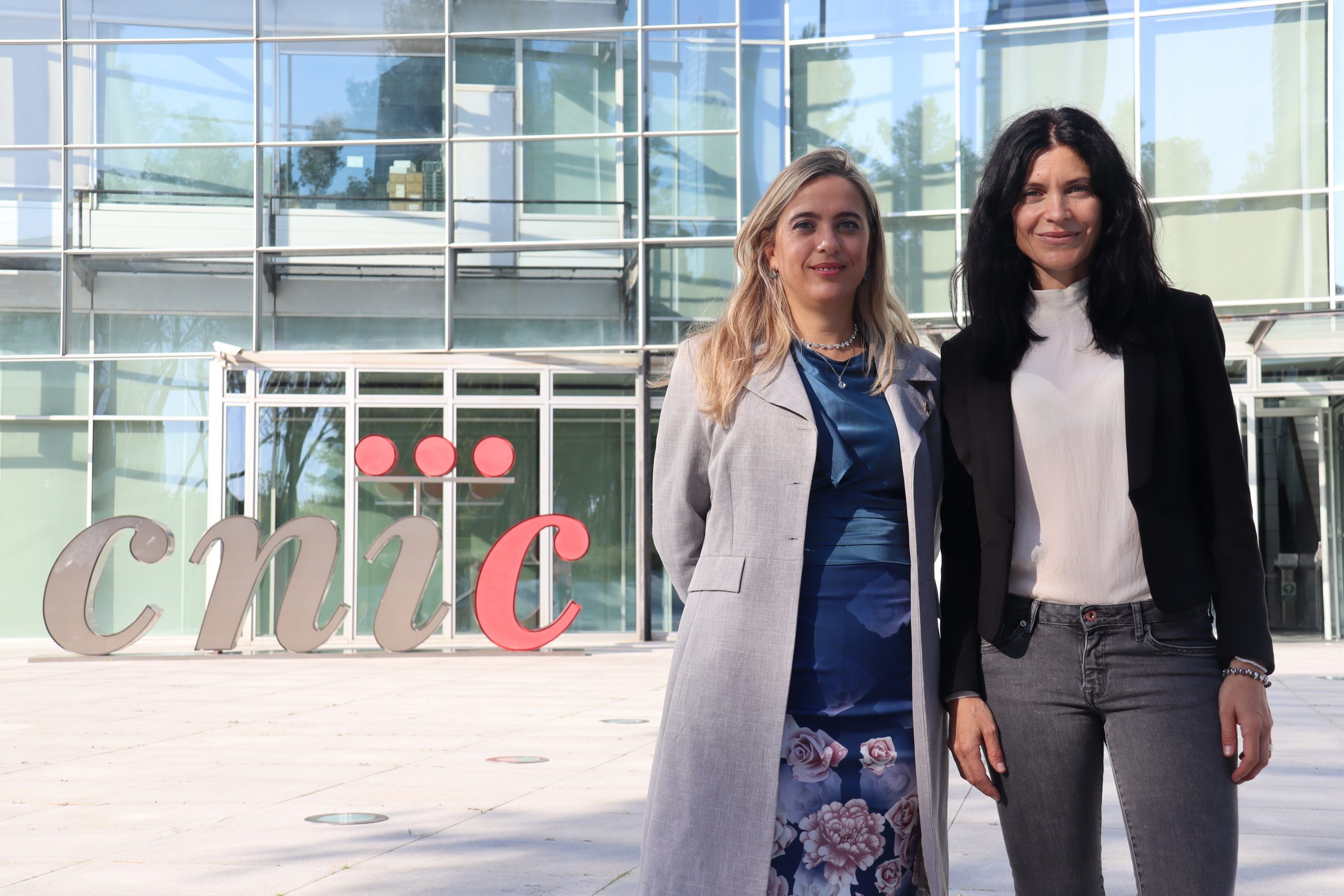
at the CNIO

Tag: liver (Page 9 of 19)

Targeting ERK3/MK5 complex for treatment of obesity and diabetes

Angel Loza-Valdes, Rabih El-Merahbi, Toufic Kassouf, Agnieszka Demczuk, Saskia Reuter, Jonathan Trujillo Viera, Till Karwen, Minhe Noh, Mona C. Löffler, Rafael Romero-Becerra, Jorge L. Torres, Miguel Marcos, Guadalupe Sabio, Urszula Wojda & Grzegorz Sumar.

Kinases represent one of the largest druggable families of proteins. Importantly, many kinases are aberrantly activated/de-activated in multiple organs during obesity, which contributes to the development of diabetes and associated diseases. Previous results indicate that the complex between Extracellular-regulated kinase 3 (ERK3) and Mitogen-Activated Protein Kinase (MAPK)-activated protein kinase 5 (MK5) suppresses energy dissipation and promotes fatty acids (FAs) output in adipose tissue and, therefore promotes obesity and diabetes. However, the therapeutic potential of targeting this complex at the systemic level has not been fully explored.

MK5 mRNA levels in subcutaneous adipose tissue in healthy lean subjects obese subjects.

Here we applied a translational approach to target the ERK3/MK5 complex in mice. Importantly, deletion of ERK3 in the whole body or administration of MK5-specific inhibitor protects against obesity and promotes insulin sensitivity. Finally, we show that the expression of ERK3 and MK5 correlates with the degree of obesity and that ERK3/MK5 complex regulates energy dissipation in human adipocytes.

Altogether, we demonstrate that ERK3/MK5 complex can be targeted in vivo to preserve metabolic health and combat obesity and diabetes.

Protocol for the assessment of mTOR activity in mouse primary hepatocytes

Ana Belén Plata-Gómez, María Crespo, Celia de la Calle Arregui, Lucía de Prado-Rivas, Guadalupe Sabio, Alejo Efeyan.

We present a protocol for measuring the activity of the mechanistic target of rapamycin (mTOR) pathway in ex vivo isolated mouse primary hepatocytes. It can be used as a tool for genetic, pharmacological, metabolomic, and signal transduction procedures.

We discuss critical aspects for improving yield, viability, and modulation of the mTOR pathway. This protocol can be adapted to other signaling cascades and is compatible with multiple readouts.

Entrevista a Guadalupe Sabio y Antonia Tomás, ganadoras del Premio de Investigación Fundación Dr. Antoni Esteve 2021

“Lo que nosotros descubrimos es que p38gamma se activa cuando la célula tiene un estrés. Ese estrés, en algunos casos, es un desencadenante de cáncer hepático ya que va a producir un aumento de la proliferación celular, es decir, que las células se empiecen a multiplicar. Es esa p38gamma que se activa la que controla la proliferación celular, ese aumento del número de células que al final va a desencadenar un tumor”.

Guadalupe Sabio (dcha.) y Antonia Tomás-Loba.
« Older posts Newer posts »

© 2026 Sabio lab

Theme by Anders Norén — Up ↑