at the CNIO

Author: Sabio lab (Page 33 of 62)

Protocol for the assessment of mTOR activity in mouse primary hepatocytes

Ana Belén Plata-Gómez, María Crespo, Celia de la Calle Arregui, Lucía de Prado-Rivas, Guadalupe Sabio, Alejo Efeyan.

We present a protocol for measuring the activity of the mechanistic target of rapamycin (mTOR) pathway in ex vivo isolated mouse primary hepatocytes. It can be used as a tool for genetic, pharmacological, metabolomic, and signal transduction procedures.

We discuss critical aspects for improving yield, viability, and modulation of the mTOR pathway. This protocol can be adapted to other signaling cascades and is compatible with multiple readouts.
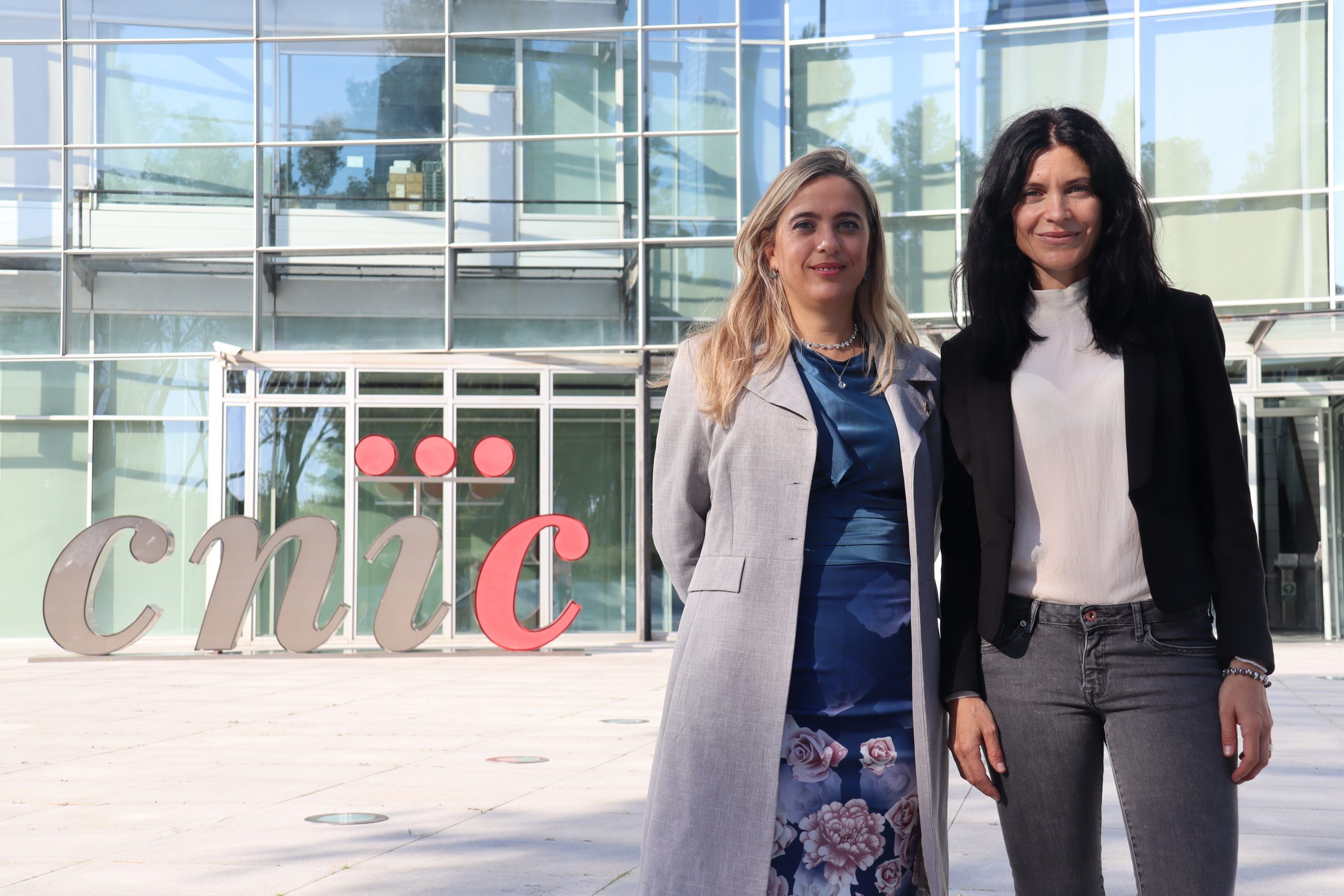

Entrevista a Guadalupe Sabio y Antonia Tomás, ganadoras del Premio de Investigación Fundación Dr. Antoni Esteve 2021

“Lo que nosotros descubrimos es que p38gamma se activa cuando la célula tiene un estrés. Ese estrés, en algunos casos, es un desencadenante de cáncer hepático ya que va a producir un aumento de la proliferación celular, es decir, que las células se empiecen a multiplicar. Es esa p38gamma que se activa la que controla la proliferación celular, ese aumento del número de células que al final va a desencadenar un tumor”.

Guadalupe Sabio (dcha.) y Antonia Tomás-Loba.

EMBO e-talks: Stress kinases in cardiometabolic diseases (3 Nov 2021)

On Wednesday 3 Novmber 2021 al 14:00 (CET), Guadalupe Sabio will talk at an EMBO e-talk about the role of stress kinases in cardiometabolic diseases.

To attend the talk yu should register at the following link: https://embo-org.zoom.us/webinar/register/WN_ePJby4iNRbyj0oSxxtgDUQ

The p38 mitogen-activated kinase (MAPK) family controls cell adaptation to stress stimuli. There are four different p38 family members with different roles in relation to cardiac development and function.

The first isoform demonstrated to play an important role in cardiac development was p38?; however, all p38 family members are now known to collaborate in different aspects of cardiomyocyte differentiation and growth. p38 family members have been proposed to have protective and deleterious actions in the stressed myocardium, with the outcome of their action dependent on the model system under study and the identity of the p38 family member activated.

In this talk, we summarize current understanding of the role of the p38 pathway in cardiac physiology and discuss recent advances in the field.

« Older posts Newer posts »

© 2026 Sabio lab

Theme by Anders Norén — Up ↑